Mr. Tatsunari Ueshima
Coffee shop proprietor
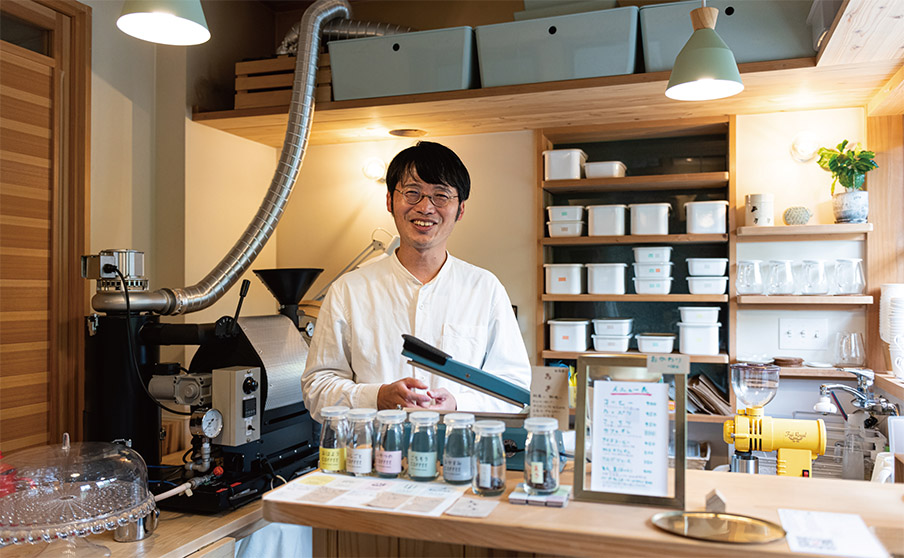
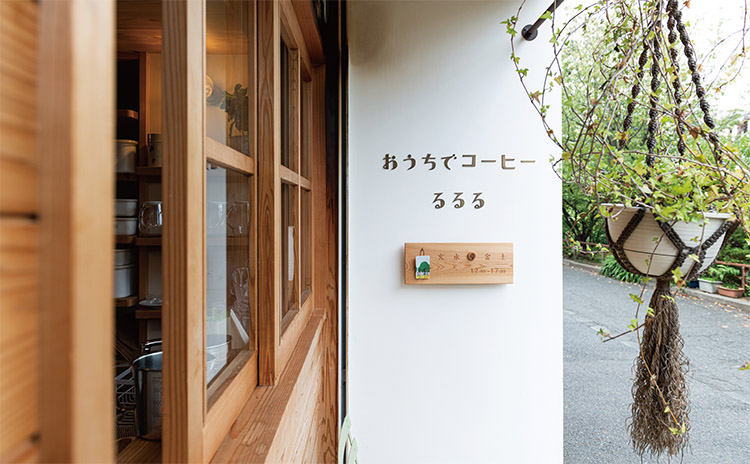
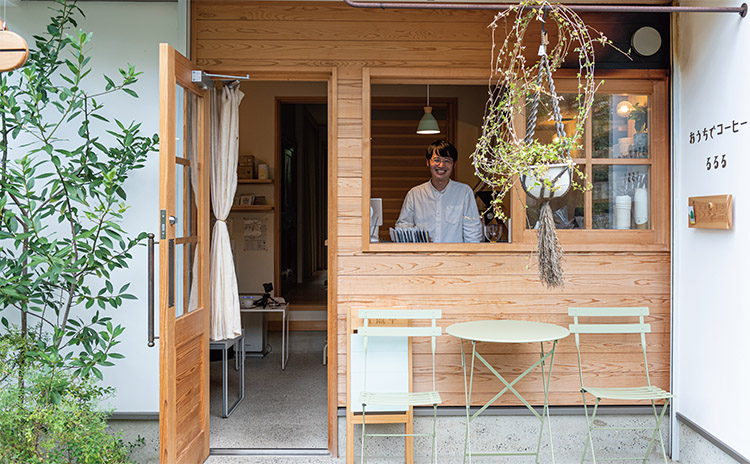
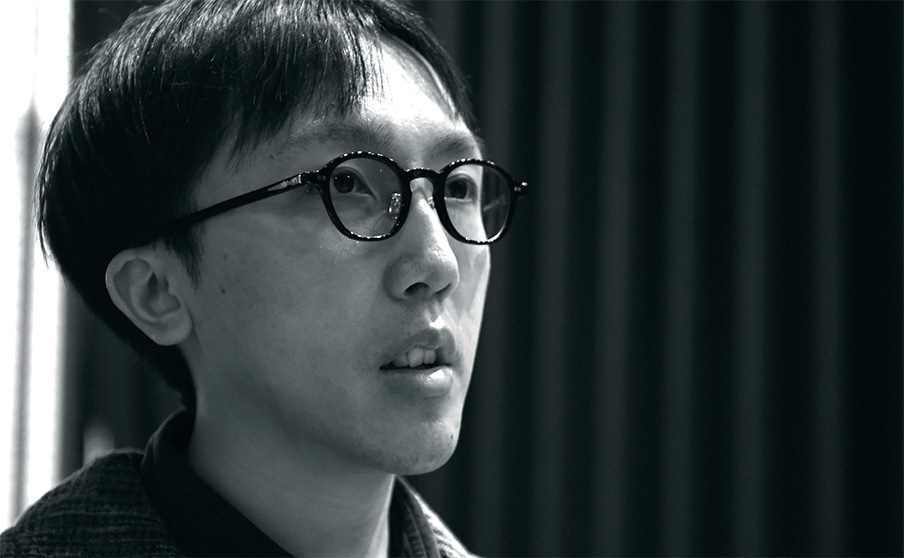
Ichijoji Temple, Sakyō-ku, Kyōto. In spring, the row of cherry blossom trees is exceptionally beautiful along the main Sosui-dori road. There's a cute little coffee shop along the way called “Ouchi de Coffee ("Coffee at Home") Rururu." Once you hear the name, you don't forget it. “Before we opened for business, I held a store event before we even had a name. Suddenly the management told me I had to come up with a name by the next day. I happened to see my son's favorite picture book, "Saru Rururu," at home and thought 'Rururu' might do as a name. Afterward I was a little embarrassed (laughs), but I like it now because everyone remembers it,” Ueshimaexplainswith a gentle smile. On the refurbished first floor of his own house,
I wanted to live in Kyoto
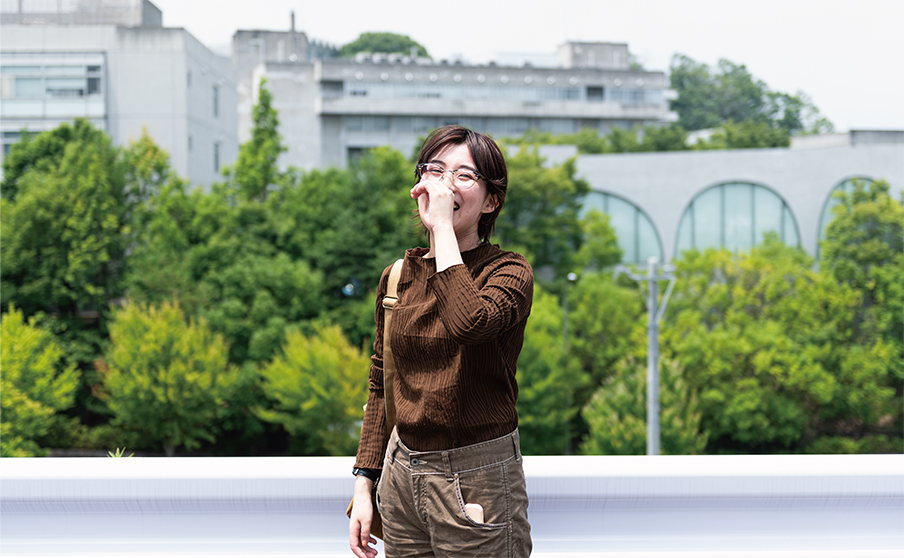
Ueshima-san is from Iga Ueno City in Mie Prefecture. He spent his junior high school at a boarding school for boys in Osaka and high school in Tsu City - a hectic life moving about during those impressionable years. After graduating from high school, he attended a vocational school for computing, then signed on as a programmer at an IT company started by a relative. Later he changed fields completely, becoming a tofu maker in Kyoto. “I first decided where I wanted to live, then looked for a job there. That place was Kyoto (laughs). I thought 'what should I do in Kyoto,' and started to search. The first thing that popped up was 'tofu.' I looked at a several companies, and when I found one that looked good, I just went there - no appointment or anything. Not surprisingly they didn't hire me on the spot, but a few months later I got the job." He really wanted was to work in the tofu factory, but the company valued his previous experience and put him to work building and operating their online shop. That's where he met Natsumi, now his wife. After they met, he
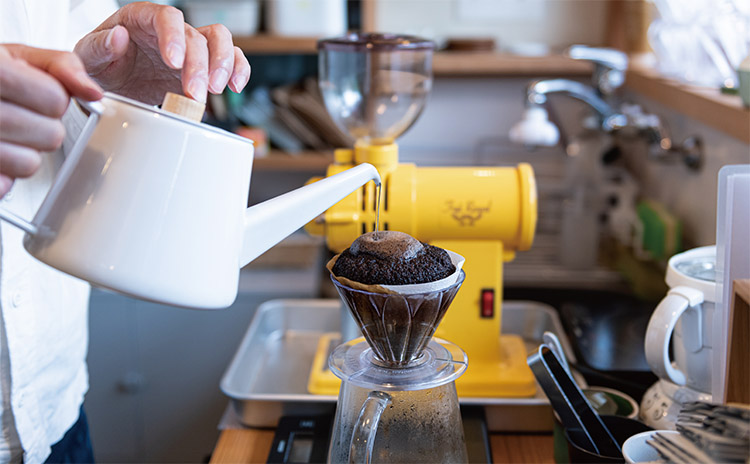
Grinding beans with the customer in mind.
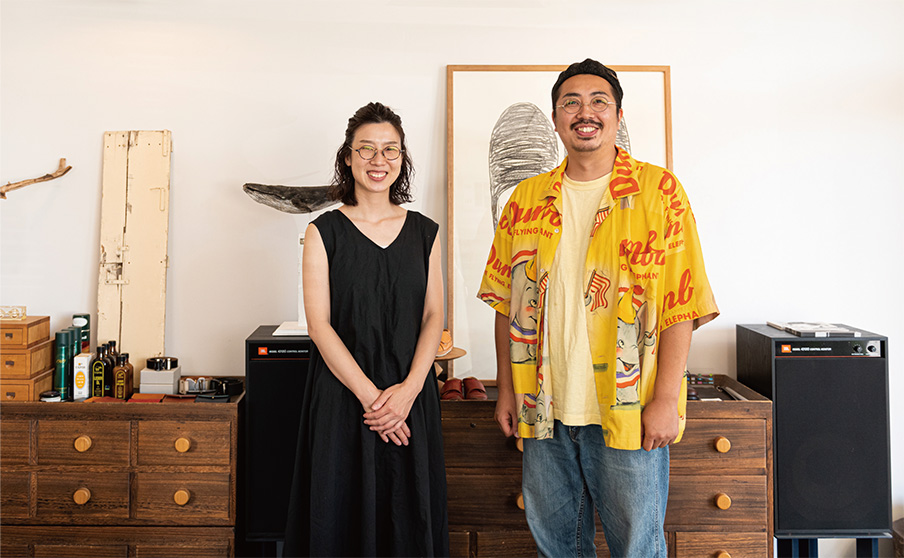
"When I went to my wife's parents' house, I was shocked, or at least surprised, to see how much importance they placed on eating and taking tea together. Everyone would join together to set the table with place mats, chopstick holders, and food dishes. Without fail they take tea together 2 or 3 times a day, and that's their happiest time. Being welcomed into this circle made me think I would love to open a shop with this same feeling." Ueshima also had a growing son, and often wished he could be nearer the family. So he quit the tofu maker where he'd been for eight years and spent the next two years studying and researching store management and coffee roasting. Working at a famous Kyoto coffee shop, he sought guidance directly from the founder, who was something of a local legend. In 2019, after putting on a number of events at the shop, he renovated the vacant house where Natsumi's grandparents had previously lived, converting it to a combined home and shop, and began his new life as a coffee shop owner.
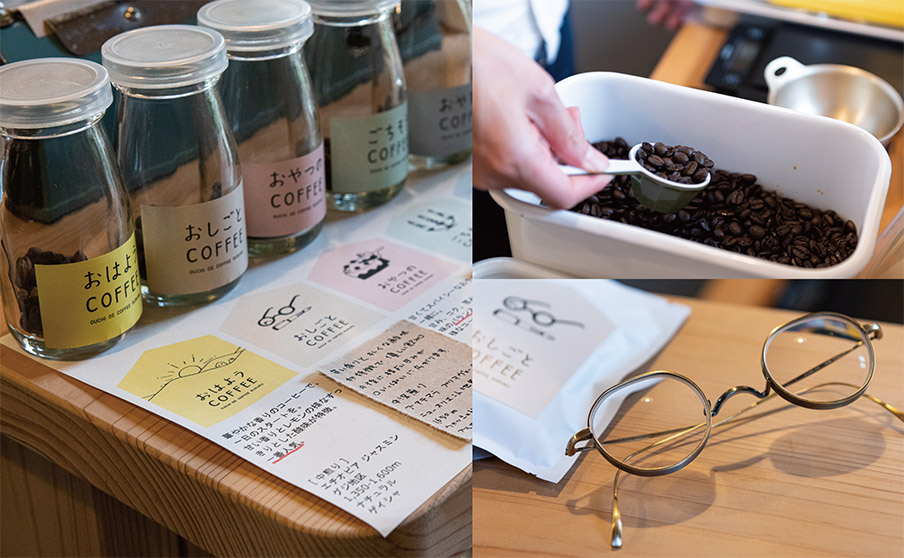
“When it comes to roasting, I focus on my five senses and on analyzing data. Combining these two opposing dimensions improves my accuracy. I first test the aroma and flavor with my own senses, then look at the data. This lets me sharpen the character of the coffee. I think it's so important to create a coffee that's true to me and to the shop.” Ueshima's shop aims for a coffee free of off-flavors and delicious even when not hot. He roasts beans to match every part of the day, from waking up, to hard at work, to a relaxing end of the day. He wants to provide a more personal experience, with a taste matched to each individual. This makes communication with customers all the more important.
“At the shop, I try to imagine what might most please the customer in front of me and make choices based on conversations we have about their tastes and physical state. I love to present new roasts I've been working on to regular customers. I'm trying to rid myself of theories, techniques, and concepts like 'this is the way it's normally done,' and build up a repertoire of what I think is good. I hope eventually to offer coffee that could only come from this shop. Ultimately I would like to make products that are roasted individually for each customer. Beyond that, I want to perfect my roasting to the point that I can teach someone else. That might be my ultimate goal at this point. I also think coffee shops have a mission to convey the background and circumstances of producers and countries of origin to their customers. Knowing that background makes coffee more delicious than simply drinking it without hearing anything.
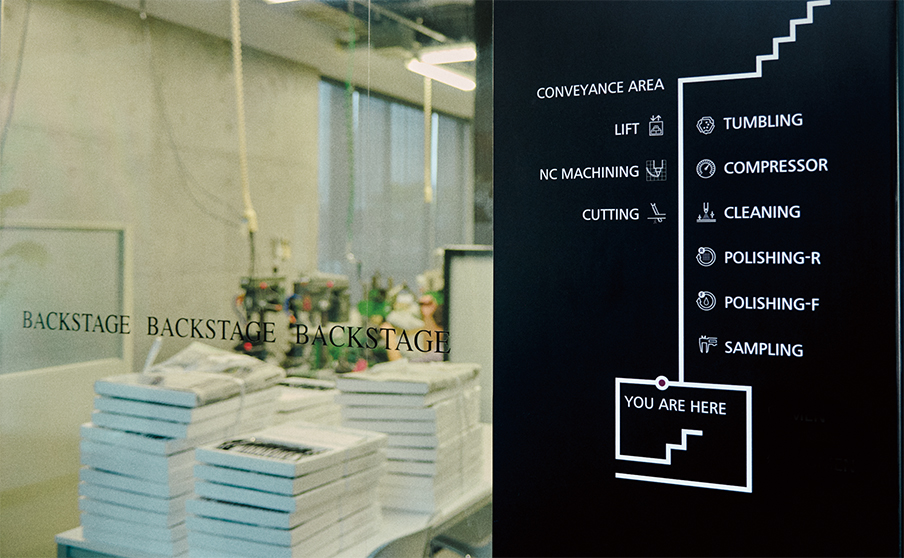
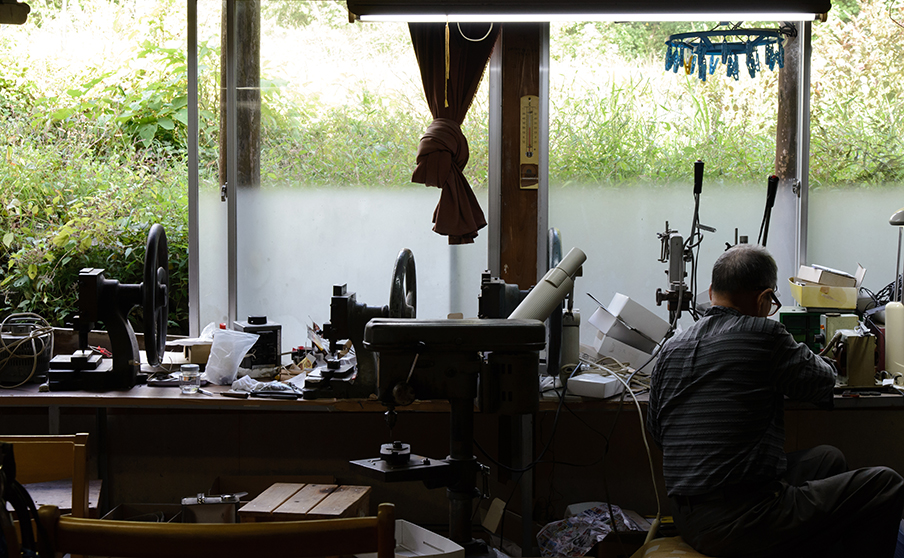
KANEKO OPTICAL also attaches great importance to conveying the spirit of their handmade workshops to customers in
Glasses are both a form of expression and a work tool.
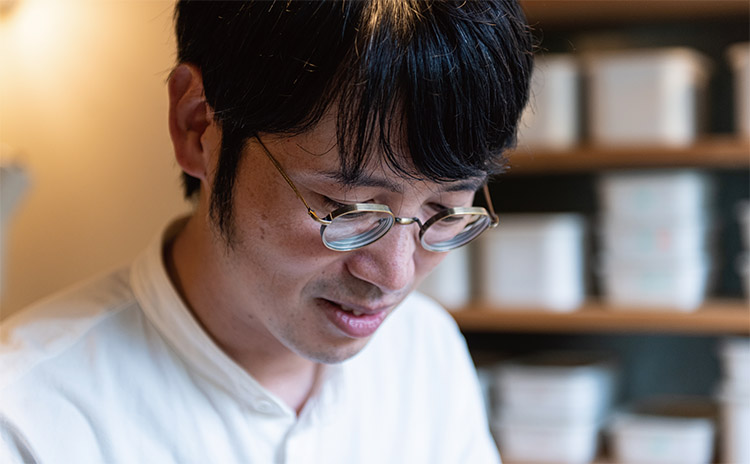
The glasses Ueshima currently wears are only the second pair he's owned since he joined the workforce. Both were purchased at the Kaneko Optical Kyoto store. “I'm pretty sure the first time I bought glasses from Kaneko was when I was 34. I got married that year, and we both bought glasses together. From the beginning I wanted to buy Japanese-made frames. The ones I found were made by Ido Tamio. They were rounded and made a gentle impression. I chose them because that was what I wanted to convey to people around me. I was happy to find glasses I liked, and I have to say the atmosphere and customer treatment at Kaneko were the best of all the opticians I'd seen. In fact I started coming back regularly to the shop for little adjustments." He loved the frames, and wanted to preserve the same look, so he kept wearing them for seven years, changing out the lenses as needed. In January 2022, he bought new glasses when the old frames broke. The new frames still had that rounded, gentle look, but he chose a thicker, decorative rim with a greater sense of volume. These have become a new favorite. For Ueshima, glasses are a performance tool expressing his inner personality, but also an indispensable work tool.
“People imagine coffee shop owners wearing an apron, but that's not quite me. It's more white shirt, jeans, and glasses. Also, if I start wearing glasses completely different from before, customers might think, 'what's going on?' In my daily rounds, I often run into customers outside the shop, and I want to be the same person wherever we meet. It's comfortable for me and the customers feel at ease. And